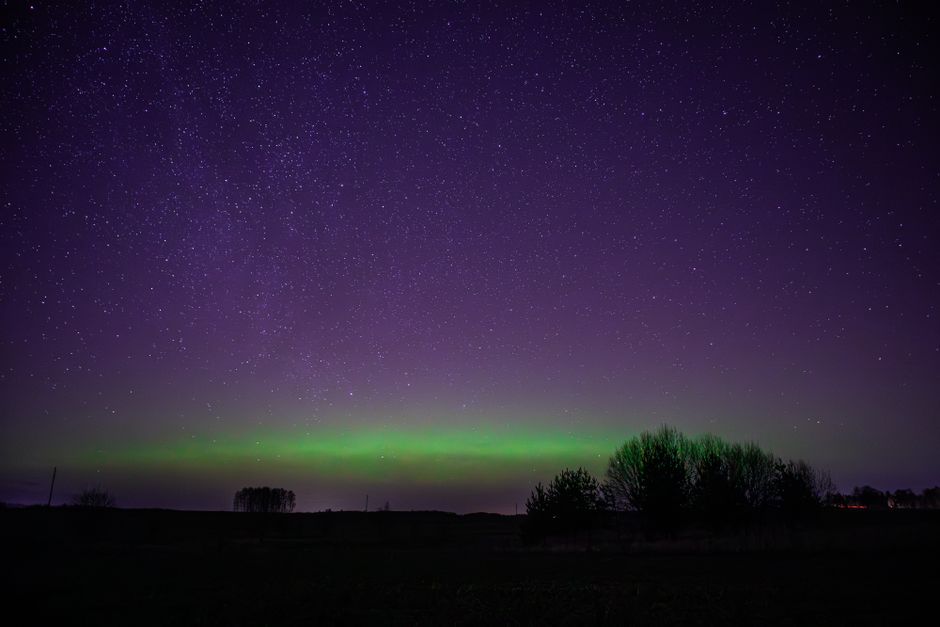
When were G3 geomagnetic storm conditions expected to continue through?

NOAA’s Space Weather Prediction Center said the warning for G3 or stronger geomagnetic storm conditions ran through 10/2359 UTC.
The warning period
The confirmed timeline was:
| Time | What NOAA reported |
|---|---|
| 08 Oct | CME occurred |
| Around 10/1434 UTC | CME arrival was linked to an enhanced solar wind environment |
| Starting 10/1758 UTC | The geomagnetic field reached G3 conditions |
| Through 10/2359 UTC | Warning period for G3 or stronger storm conditions |
What that means for timing
NOAA expected G3-level conditions to continue at or near that level through the stated warning period. The available context does not extend that warning beyond 10/2359 UTC.
Space weather alerts can update quickly, so use NOAA’s latest notice if you are checking after that time.
What should aurora watchers in the northern US do during a G3 geomagnetic storm warning?

During a G3 geomagnetic storm warning, aurora watchers should focus on the confirmed NOAA timing and avoid treating the alert as a visibility guarantee.
What NOAA confirmed
NOAA reported strong geomagnetic storm conditions on 10 Oct 2026. The warning for G3 or stronger conditions was in effect through 10/2359 UTC, and G3 conditions began at 10/1758 UTC.
The agency linked the activity to an enhanced solar wind environment after a CME from 08 Oct arrived around 10/1434 UTC.
What to check before watching
If you are in the northern US and following aurora visibility, check the current NOAA Space Weather Prediction Center update during the warning period. The available context confirms the storm warning and timing, but it does not confirm where auroras would be visible or whether any specific location would have a clear view.
For viewing plans, treat the NOAA alert as a space weather update, then confirm the latest conditions from the official source.
What changed after the 08 Oct CME arrived on 10 Oct?

NOAA linked the 08 Oct CME’s arrival on 10 Oct to a stronger space weather environment, followed by G3 geomagnetic storm conditions later that day.
The reported change
According to NOAA’s alert, the CME from 08 Oct arrived around 10/1434 UTC. After that, NOAA described an enhanced solar wind environment.
The geomagnetic field then reached G3 conditions starting at 10/1758 UTC.
The short timeline
- 08 Oct: CME occurred
- Around 10/1434 UTC on 10 Oct: CME arrived
- After arrival: NOAA reported an enhanced solar wind environment
- Starting 10/1758 UTC: G3 geomagnetic storm conditions were reached
- Through 10/2359 UTC: G3 or stronger conditions were under warning
NOAA said G3-level conditions were expected to continue at or near that level through the warning period. For any later status, check the current NOAA update rather than relying on the earlier alert alone.
Sources / Learn more
Related reading
- When is Hurricane Polo expected to reach the Baja California Peninsula?; What should people in southwestern Mexico do as Hurricane Polo brings heavy rain and gusty winds offshore?; How does Hurricane Polo’s rapid intensification compare to Hurricane Patricia and Hurricane Otis?; What made Hurricane Polo the third Category 5 storm of the year in the eastern Pacific after Genevieve and Lowell?
- What should residents of the Big Island and Maui do now that a Hurricane Watch, Tropical Storm Warning/Watch, and flood watches are in effect for Hurricane Nolo?; When will tropical storm and hurricane conditions from Hurricane Nolo actually arrive in Hawaii?; How would a more northerly track for Hurricane Nolo change the wind and flooding threat to the Big Island?
- What is NASA asking US industry to plan for commercial space stations?; How would commercial space stations change activity in low Earth orbit?
- What condition has Rosie O’Donnell said must be met before she’ll return to the US?
Leave a Reply