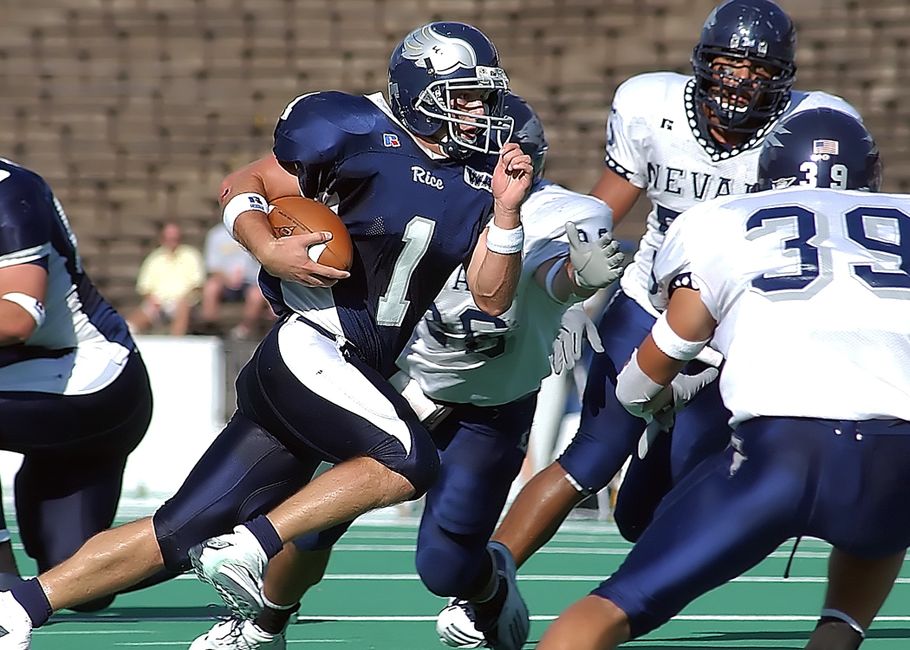
How can Brock Bowers use size and body position when a defense covers him with a cornerback?

When a defense puts a cornerback on Brock Bowers, the matchup changes. A cornerback is usually built to cover receivers in space, so Bowers cannot rely only on the same route-running approach he might use against a linebacker or safety.
The direct answer
Bowers can use size and body position by turning the matchup into a leverage problem.
Against a cornerback, the key ideas are:
- Use his frame to shield the defender from the ball.
- Lean on strength at the top of routes without losing control.
- Create throwing windows by placing his body between the cornerback and the catch point.
- Stay controlled with his footwork so his size does not make the route predictable.
Raiders.com reported that the Chiefs used a cornerback on Bowers, rather than the more typical linebacker or safety coverage. Bowers said that kind of matchup makes him lean more on size, strength, body position, and controlled shiftiness.
Why that matters for route running
Cornerback coverage asks a tight end to win in a different way. A smaller, quicker defender may be harder to separate from cleanly, so Bowers’ advantage becomes how he positions himself.
That can matter most near the catch point. If he can keep the defender on his back or outside his frame, the quarterback has a clearer target even when the route is tightly covered.
What to watch next
The source confirms that defenses are already adjusting how they cover Bowers. What is not confirmed here is whether more teams will use cornerbacks on him every week. For the latest matchup details, check the Raiders’ official updates before each game.
What changed for Brock Bowers after returning from his reported left-knee meniscus trim?

Brock Bowers missed the Raiders’ first two games while recovering from a reported left-knee meniscus trim. Once he returned, the confirmed change was simple: he immediately became a high-volume part of the passing game again.
What changed after his return
In his first game back against the Saints, Bowers had:
| Stat | Total |
|---|---|
| Catches | 10 |
| Targets | 14 |
| Receiving yards | 116 |
| Touchdowns | 1 |
He followed that with another busy game: six catches on a game-high 11 targets for 86 yards and another difficult touchdown.
What those numbers show
The available context does not give a medical evaluation or say how the knee responded physically. It only confirms what happened on the field.
Bowers was targeted often, produced yardage in both games, and scored a touchdown in each. That is the practical takeaway from the reported return: the Raiders used him heavily right away.
What is not confirmed
The source does not say whether he had any restrictions, whether his workload changed in practice, or how the team viewed his long-term recovery. For current injury status or availability, the best check is the latest official Raiders information.
How do Brock Bowers’ recent target totals show his role in the Raiders offense?

Brock Bowers’ recent target totals point to a clear role: the Raiders are looking for him often in the passing game.
The target totals
The confirmed numbers are:
| Game context | Targets | Catches | Yards | Touchdown |
|---|---|---|---|---|
| Against the Saints | 14 | 10 | 116 | 1 |
| Following game | 11 | 6 | 86 | 1 |
The second game total was described as a game-high 11 targets.
What that says about his role
Targets are not the same as catches, but they do show where the offense is trying to send the ball. A 14-target game followed by a game-high 11-target game suggests Bowers was not being used as a minor option in those matchups.
The Raiders were giving him repeated chances, and he turned those chances into production: more than 80 receiving yards in both games and a touchdown in each.
The coverage angle
Raiders.com also described Bowers as a tight end making defenses rethink how to cover the position. That fits with the target totals: if an offense keeps going to a tight end, defenses may have to change the matchups they use against him.
The role can still vary by opponent and game plan, so check the latest Raiders notes for current usage.
Sources / Learn more
Related reading
- Where can fans catch Taylor McGregor’s coverage now that she’s full-time at ESPN?
- When is Google’s Project Suncatcher satellite launching, and what’s the next milestone after that?; How is Google planning to solve the cooling problem for TPUs operating in space?; How much more solar power does low Earth orbit provide compared to Earth for running AI hardware?
- When is Kevin Durant expected to return from his ankle and knee injuries for the Rockets?
- What condition has Rosie O’Donnell said must be met before she’ll return to the US?
Leave a Reply