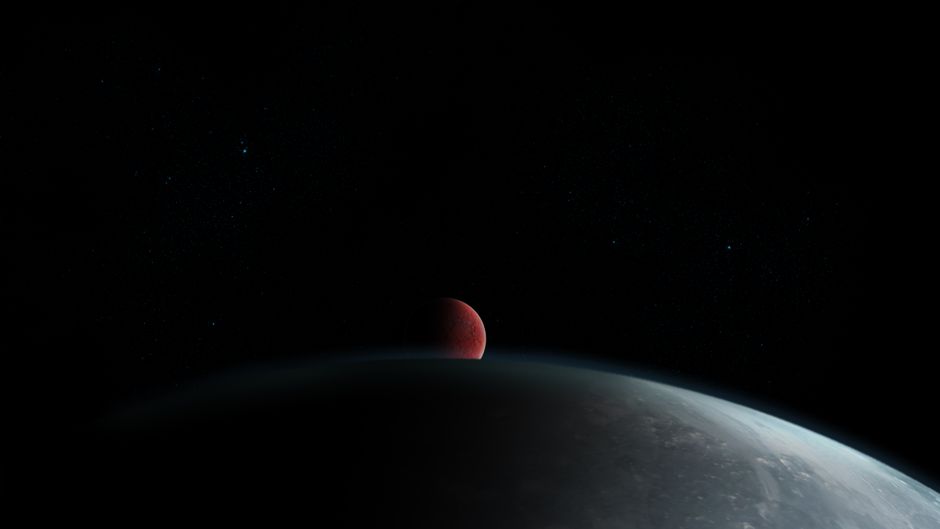
What does NASA say happened when Theia struck the young Earth?

NASA’s Webb-related coverage uses Theia as an example of a major collision in planetary history.
What NASA says happened
According to the provided NASA context, scientists theorize that Theia, described as a Mars-sized body, struck the young Earth early in solar system history.
The impact is described as having vaporized large amounts of material.
Why it matters in the Webb article
The NASA item is about violent collisions in planetary systems. The Theia example helps explain the kind of large-scale impact the article is discussing.
The available context does not add more details about the aftermath, timing beyond “early in solar system history,” or the exact material affected.
What remains limited here
This summary is based only on the provided context. For the fuller NASA explanation, including any additional scientific framing, check the NASA source directly.
How does NASA’s Webb coverage connect planetary collisions to early solar system history?

NASA’s Webb coverage connects planetary collisions to early solar system history through the example of Theia and the young Earth.
The timeline connection
The provided context says scientists theorize that Theia, a Mars-sized body, struck the young Earth early in solar system history.
That places the collision in the early development of the solar system, rather than in a recent planetary event.
How Webb fits into the topic
The NASA page is described as part of NASA Science coverage connected to Webb and planetary science. The article discusses violent collisions in planetary systems, with the Theia impact serving as a concrete example.
The context does not state a specific date for the impact or describe a detailed sequence of events.
What to take from it
The practical takeaway is narrow but useful: NASA’s Webb-related planetary science coverage uses early solar system collisions, including the theorized Theia impact, to discuss how violent impacts can shape planetary systems.
What kind of material was affected by the Theia impact according to NASA?

NASA’s description of the Theia impact focuses on the scale of material affected, not a detailed inventory of what that material was.
The material NASA mentions
The provided context says the Theia impact vaporized large amounts of material.
It does not identify the material more specifically in the summary provided here. So the careful answer is: NASA’s context confirms that a large amount of material was vaporized, but it does not specify the exact composition in this block.
What caused that effect
The source says scientists theorize that Theia, a Mars-sized body, struck the young Earth early in solar system history.
That collision is the event NASA connects to the vaporized material.
Why the wording matters
“Vaporized large amounts of material” is the confirmed detail available here. Anything more specific would need to come from NASA’s full article, not from this short context alone.
Sources / Learn more
Related reading
- What can viewers identify in NASA’s nighttime space station image of the United States?; When was NASA’s nighttime space station view of the United States taken?
- What does NASA’s Star Trails image show above Earth?; How can readers tell the blue fishing boat lights from the yellow Indonesian city lights in the image?
- What is the timeline of Hayden Panettiere’s career, from her early acting work to her death in 2026?
- What is Modulate Space Corporation developing for NASA’s lunar 5G communications system?; How could built-in Wi-Fi be used in a 5G communications system on the lunar surface?
Leave a Reply