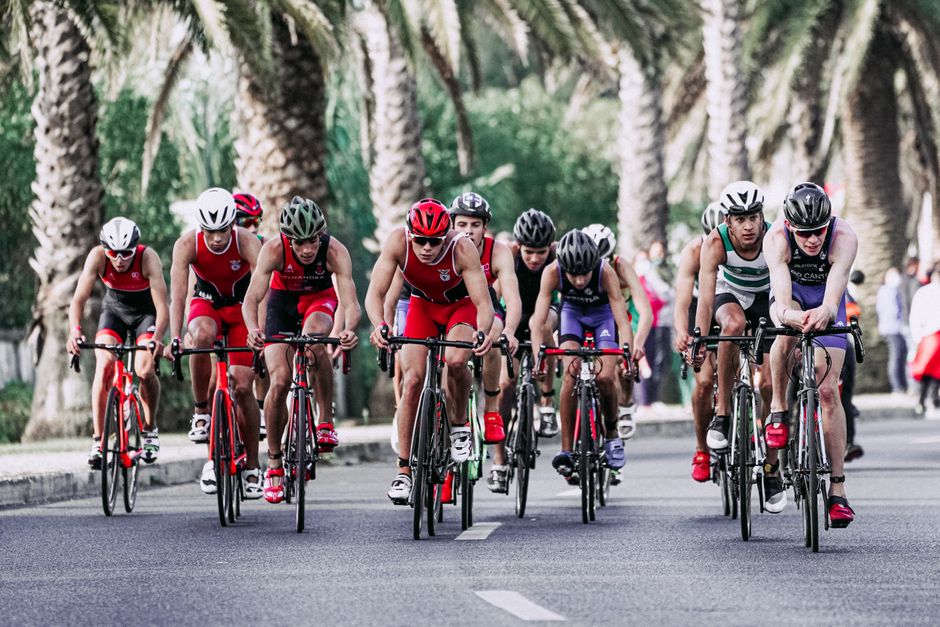
How did Team USA’s race plan help Brandon McNulty win the men’s road race at Worlds?

Team USA’s plan mattered because it gave Brandon McNulty a clearer tactical role: conserve energy while the right teammate handled the early danger.
The direct answer
The Team USA cycling strategy was built around a division of jobs.
Matteo Jorgenson helped shape the plan during a Vermont training camp. On race day in Montreal, Quinn Simmons was assigned to cover the decisive early move, while McNulty and Jorgenson stayed behind and saved energy.
That mattered because the men’s road race was 273.4 km and lasted more than six hours. In a race that long, spending less energy early can be just as important as attacking late.
How the pieces fit together
The plan had three confirmed parts:
- Quinn Simmons covered the early move.
- Brandon McNulty conserved energy behind.
- Matteo Jorgenson also stayed back rather than chasing every move himself.
Team USA largely carried out that approach on race day. McNulty then won the elite men’s road race, giving the United States its first winner in the event since Lance Armstrong in 1993.
Why the plan suited this race
The race was described as unusually open. Tadej Pogačar was absent, and the field had many possible winners.
That kind of race can reward a team that stays organized. Team USA did not need every rider trying to win in the same way. Instead, the plan gave each rider a specific job.
For the latest race details or any later official updates, check the source linked below.
What role did Quinn Simmons play in Team USA’s Worlds road race strategy?

What role did Quinn Simmons play in Team USA’s Worlds road race strategy?

Quinn Simmons’ job was not simply to ride near the front. His confirmed role was more specific: cover the move that Team USA believed could shape the race early.
Simmons’ role in the plan
The Quinn Simmons Worlds role was to mark the decisive early move for Team USA.
That allowed Brandon McNulty and Matteo Jorgenson to avoid spending energy too soon. Instead of forcing McNulty or Jorgenson to respond immediately, Simmons handled that early tactical responsibility.
Why that mattered
In a 273.4 km men’s road race, early decisions can affect the final hours. If a team burns its strongest options too soon, it may have less left when the race reaches its decisive phase.
Team USA’s plan gave Simmons the covering role, while McNulty and Jorgenson conserved energy behind. The riders largely followed that strategy in Montreal.
The outcome
McNulty went on to win the elite men’s road race. The win was the United States’ first in that event since Lance Armstrong in 1993.
The available source confirms Simmons’ tactical assignment, but it does not give a full minute-by-minute account of every move. For the race account itself, use the source below.
Why was the men’s road race at Worlds described as unusually open?

Why was the men’s road race at Worlds described as unusually open?

The men’s road race at Worlds was described as unusually open because there was no single overwhelming setup in the source’s account.
Why the race was considered open
The key confirmed reason was Tadej Pogačar’s absence.
The source also describes the race as having many possible winners. That matters because when a dominant rider is not present and several riders look capable of winning, teams may have more tactical room.
What changed for Team USA
For Team USA, the open field made a structured plan more valuable.
The American approach was built around Quinn Simmons covering the decisive early move, while Brandon McNulty and Matteo Jorgenson conserved energy behind. In a race with several possible winners, that kind of role clarity can help a team avoid chasing every threat with the same rider.
What is not confirmed
The context does not list every contender or explain how each team adjusted to Pogačar’s absence. It only confirms that the race was viewed as unusually open, with Pogačar absent and many riders seen as possible winners.
For fuller race detail, check the linked source.
How significant was Brandon McNulty’s win for U.S. cycling history?

Brandon McNulty’s win was significant because it ended a long gap for the United States in the elite men’s road race at Worlds.
The historical comparison
McNulty became the first American winner of the elite men’s road race since Lance Armstrong in 1993.
That is the main confirmed historical point: the United States had not won that specific Worlds event again until McNulty’s victory in Montreal.
Why the win stands out
The race itself was 273.4 km and lasted more than six hours. Team USA entered with a plan shaped by Matteo Jorgenson during a training camp in Vermont, and the riders largely executed it.
Quinn Simmons covered the key early move, while McNulty and Jorgenson conserved energy behind. McNulty then won the race.
Bottom line
For U.S. cycling history, the headline is simple: McNulty’s win restored an American name to the elite men’s road race winners list for the first time since 1993.
For any later official historical notes or race-record updates, compare against the source below.
Sources / Learn more
Related reading
- What is Colorado doing to address the team conduct issue after the Northwestern loss?
- What roster changes has Deion Sanders made to Colorado’s team following the Northwestern loss?
- How often has Marvin Harrison Jr. had a low-target game over his last eight outings, and what does that pattern mean for his role in the Cardinals offense?
- What time do gates open and performances start at Oceans Calling 2026 on Friday after the schedule change?
Leave a Reply